Monday, December 30, 2024

The Avengers (2012) - Soundtrack


Listening to this soundtrack oft times makes my heart starting doing a little dance. Because it brings back the joyous memory of what it was like to see The Avengers for the very first time, on its opening weekend.

I miss that feeling. That energy. That excitement. Because, more and more, my reaction to a Marvel Cinematic Universe movie, post-Endgame, has shriveled down to... "Meh. Maybe I'll go see it. Maybe."

But Silvestri's rousing action score and fist-pumping Avengers Theme brings it all back. Reminds me of a time when these movies were something I looked forward to seeing, rather than something I might to catch up with at a later time of convenience. If there is nothing else to watch, that is...

The Blair Witch Project (1999) - Trading Card #12

First Day

Joshua Leonard shows up, slightly late as usual, for Day One of Heather Donahue's film/video project. "My documentary will tell the story of the Blair Witch, trying to separate the known facts from the legend that has grown up around them," stated Donahue in her 1994 proposal. "The heart of my film will be a weekend journey in the Black Hills Forest, the physical location for many of the legend's most famous incidents."

Saturday, December 28, 2024

Nosferatu (2024) - Review


The very moment I heard that Robert Eggers was remaking Nosferatu, I knew I had to see it. Even though I have yet to see anything he has made. Yes, this is true. I, lifelong horror fan that I am, have not seen The Witch, The Lighthouse, or The Northman. So it goes.

Want to know what is worse than that? I have not seen the original silent film, nor have I seen Werner Herzog's 1979 remake of it. I have only seen images and snippets from both.

Yet I still knew that this version of Nosferatu was going to be my kind of thing.

At least that was my expectation and, let us be honest, expectations can and are dashed and disappointed a great many times. This is just the way of the world.

But, I am glad to share, this was not one of those times. My expectations were, for the most part, met and I walked out of the Christmas Day matinee screening I attended both satisfied and happy with what I had just seen. Nosferatu had, in fact, been my kind of movie. I loved most of it.

The part I did not love, but still liked, was the film's middle section. After being sucked in, pun intended, by the glorious atmospherics and being kept on the edge of my seat, awaiting the reveal of the dreaded Count Orlok (Bill Skarsgård), the middle section seemed to drag. It did not lose me, but I did find myself thinking, "Man, they need to pick up the pace here."

I can forgive it that, because the film's final act and conclusion delivered some ghoulish delights and gruesome jolts. It delivered the kind of movie that I had wanted, expected, Bram Stoker's Dracula to be. A viewing experience that was atmospheric, unsettling, and actually scary. 

Nosferatu is one of this year's best horror films. Highly recommended.

Friday, December 27, 2024

Assault on Precinct 13 (1976) - Soundtrack


I first time saw Assault on Precinct 13 was when it was broadcast, complete and uncut, on one of our local UHF stations. By this time I was a rabid John Carpenter fan and, since we did not have a VCR at the time, I gathered together some audio tapes and recorded the broadcast that way.

Oakland Tribune - Saturday, January 30, 1982

The reason for my knowing and remembering this fact is due to my best friend (at the time) and I seeing a matinee of Evilspeak and Demonoid at the South Shore Twin Cinema that very afternoon and discussing our excitement at being able to see the movie John Carpenter made before Halloween.

I fell in love with the movie, of course, and listening to the recording I made, over and over, helped commit its score to memory. For years and years, which added up to decades, I wondered why a soundtrack album for the film had never been released.

Turns out it was due to the movie having, at most, only some twenty-six or so minutes of music. Its memorable theme, Carpenter shares in an interview for the album liner notes, was "a simplification of a Lalo Schifrin line in Dirty Harry, which in turn was a kind of rip of The Immigrant Song by Led Zeppelin."

Having had that inspiration through-line pointed out, I can now hear the connection as clear as day. Incredible.

Alien (1979) - Trading Card #9


Ripley is second in command to Dallas aboard the "Nostromo". She is a young woman, extremely intelligent and sensitive to the needs and safety of her crew mates.

Wednesday, December 25, 2024

Arrival (2016) - Soundtrack


The predominant use of Max Richter's On the Nature of Daylight during the beginning and ending of Arrival was the excuse given as to why Jóhann Jóhannsson's phenomenal score was ruled ineligible for the Academy Awards. I say that is a load of bullshit.

This score deserved a nomination, at the very least. Jóhannsson's compositions, utilizing human vocals in irregular and arrhythmic patterns, are breathtaking. The music drifts and swirls back and forth, in and around, a vibrant tapestry of emotion; invoking awe, menace, and the excitement of dawning understanding.

I think it is an incredible and beautiful piece of work.

The Blair Witch Project (1999) - Trading Card #11

Heather Donahue

Some of Heather's earliest memories are of her great-grandma's tales of civil war ghosts and witches said to haunt the area. While Heather relished the terror those stories inspired in her early on, she came to appreciate the historical and sociological value that this oral tradition provided. She made it her mission to investigate and document the origins of these stories, primarily as an act of preservation.

Monday, December 23, 2024

Army of Darkness (1992) - Soundtrack


Depressing as it is to admit, it was a struggle for me to make it through the one time I watched Army of Darkness. Which seems odd, because, on paper, this love letter to Ray Harryhausen movies, sword and sorcery fantasy, and Three Stooges slapstick should have worked.

I expected and wanted Army of Darkness to work, because I loved The Evil Dead, Crimewave, Evil Dead II, and Darkman. With a track record like that, how could I have any doubt abut it working?

Two things, though. First, the version of Army of Darkness I watched was a bootleg of the Director's Cut, the one with the Rip Van Winkle ending, and it just felt slow to me. The entire movie just seemed to sit there. Which felt off-putting and wrong.

Second, and this was the real deal breaker for me, is that I grew to dislike the character of Ash Williams (Bruce Campbell). How could the hapless everyman character from the first two films turn into such an unlikeable dunderhead? It got so bad that I began to root for the bad guys!

The version of the soundtrack I have is Varèse Sarabande's 2020 reissue, which is a presentation of the score as it heard in the theatrical release prints that screened in the United States.

While I might not have liked the movie all that much, Joseph LoDuca's score for it is incredible. As is the single track composed by Danny Elfman, March of the Dead. I've had so much fun listening to it, I might try giving Army of Darkness a second viewing.

Alien (1979) - Trading Card #8


As commander of the "Nostromo" and its crew, Captain Dallas blends discipline with humanity during his extended assignment in outer space.

Saturday, December 21, 2024

Pandemic 1918 by Catharine Arnold - Review


I had two thoughts come to mind, again and again, while reading Pandemic 1918. My first reoccurring thought was, "Damn, we got lucky with this recent pandemic." The second was, "Shit, the more things change, the more they stay the same."

We got lucky because the COVID-19 pandemic, while bad, did not unleash the hellish apocalyptic landscape that pop culture and infotainment sources love to envision and exploit. Thank mythical-god for that, at least. The nightmare scenario of the 2011 bio-thriller Contagion remains a chilling hypothetical "What if?" As does the End Times scenario of Stephen King's The Stand. 

But there were a lot of disheartening similarities between the 1918 pandemic and that of 2020. People dismissing and/or downplaying the looming viral threat? Check. People fighting mask mandates? Check. People believing that the 'true' illness was, if fact, not what people were actually getting sick and dying from? Check. People arguing that the illness was actually a bio-weapon? Check.

Did we learn nothing? Because it kind of seems that way.

The 'average' seasonal influenza tends to kill the elderly (those over 65), the very young (those aged 5 and under), and the immunocompromised. A fact that helped a few medical professionals be somewhat dismissive of an outbreak of influenza in the early days of the 1918 pandemic. Only after a distressing and disturbing number of healthy adults, the kind that usually contract and recover from the flu in a matter of days, got sick and died did the severity of this new strain of influenza begin to be taken seriously.

Not that there was all that much that could have been done, other than encourage people to engage in social distancing and stay outside, in the fresh air, for as long as possible. Because the medical technology and resources needed to combat the pandemic did not exist yet. Then again, the people of today are pushing back against those technologies and resources. Go figure. 

Which brings me to another frustrating similarity between the 1918 and 2020 pandemics. There were a lot of commentators and pundits that liked to dismiss COVID-19 as a nuisance. One that was no more dangerous than the flu. My response to these incredulous at best, and down right callous at worst, statements was to think, "Don't you know how many people die from the 'average' flu every year?" In the United States alone the number fluctuates from 10 to 50 thousand people. Globally, on average, the total is half a million. That is a lot of people dying from what is being dismissed as a nothing burger of an illness.

But the deaths from the 1918 pandemic dwarf those numbers. An estimated 100 million people died. What made this outbreak so virulent and deadly? Current research and testing point to the 1918 influenza being a form of bird flu that adapted to humans. An adaptation that provoked a lethal auto-immune response called a cytokine storm. That is what some are theorizing killed so many people.

Theories aside, Pandemic 1918 is filled with chilling and heartbreaking stories and images of the global devastation that was wrought by this new strain of influenza. One I think a lot of people should read, especially those who still dismiss COVID-19 as being 'no worse' than the flu.

Friday, December 20, 2024

Arena (1989) - Soundtrack


The elevator pitch for Arena might have gone something like, "Hey, think Rocky, only he has to fight the Predator instead of Apollo Creed!" Too bad the pitch is more exciting than the film itself.

Composer Richard Band, in his liner note for this Intrada release, shares how the music he wrote and performed for Arena marked a turning point in his career. "Up until then," Band writes, "I had primarily composed for orchestra, using electronics in only a few scores. But Arena called for something different - a truly futuristic electronic score."

With the assistance of Gary Chang's Fairlight and Synclavier, Band was able to achieve the "driving futuristic feel" he desired. He also came to understand the necessity of becoming better versed with the technology, which he now recognizes as his first step towards going fully electronic in the 1990s.

While this might not be Band's best electronic score, it is by no means terrible. Like so many other scores for movies of this kind, the music is one of the best things about it.

The Blair Witch Project (1999) - Trading Card #10

Working Together

Joshua Leonard and Heather Donahue working together in the editing room at Montgomery College in Maryland. Although film teacher Michael DeCoto considered the two to be polar opposites, personality-wise, "they seemed to enjoy working together," DeCoto admitted in a recent interview. Leonard clearly loved movies, but his commitment to a professional career as a filmmaker was questionable, according to DeCoto.

Wednesday, December 18, 2024

Jujutsu Kaisen, Volume 2 - Review


The battle against a cursed womb residing in a detention facility takes a tragic turn when Yuji Itadori appears to loose control of Ryomen Sukuna. 

Volume 2 of Jujutsu Kaisen overflows with sorcery battles and expansive world-building. New characters and group dynamics are introduced while a variety of backsides get kicked, good and hard.

It turns out that the higher-ups of Jujutsu High are not too keen about a cursed object vessel attending the school. An opinion that seems to be shared by some of the second and third year students. Something that 'forces' Satoru Gojo to engage in some outside-the-box thinking and teaching.

But there is more going on than that. Powerful curses are also plotting and planning their own nefarious schemes for the Itadori-Sukuna one-two combo, which means all these fireworks are just the prelude for much bigger battles to come.

Any magic system that requires the binge watching of movies as a form of prep is one I can get behind. Add a trash-talking second-year student that just so happens to be a panda and my nabbing and reading the third volume of Jujutsu Kaisen is a sure thing.

April Fool's Day (1986) - Soundtrack


I have three versions of this soundtrack.

The first is the vinyl album that was released by Varèse Sarabande in 1986, which is just an all-electronic presentation of the score, performed by the composer.

Second is a compact disc release of the vinyl album recording that served as the kick-off for Varèse Sarabande's 12 disc LP to CD Subscription Series. Which resurrected out-of-print soundtracks that, at the time, had not had official compact disc releases.

The third and last, but in no way shape or form least, version is the one pictured. This is Varèse Sarabande's 'Deluxe Edition' offering, coupling the actual score used in the film with the electronic realization Bernstein released in 1986. There is also a wealth of stingers and source cues tossed in.

Only thing missing, from all three versions, is Jerry Whitman's song Too Bad You're Crazy, which plays over the film's end credits.

Alien (1979) - Trading Card #7


This looks to be a behind-the-scenes photo. One where actor Yaphet Kotto can be seen sitting in the background window, maybe taking a breather. 

Monday, December 16, 2024

Island of Terror (1966) - Review

"As far as I can tell, the body doesn't have any bones."


We went to the Galapagos Islands this year, which scratched another destination off of our world travel bucket list. While on the island of Santa Cruz we visited the El Chato Giant Tortoise Reserve, where we got to walk amongst a whole lot of giant tortoises.

A handful of the giant tortoises we saw.

And there were a lot of giant tortoises there. I mean it. Those things were everywhere. A sight that got me perseverating about 1966's Island of Terror, of course. What else would an aging horror geek like myself think about while standing in a wooded area filled with giant tortoises?

Which meant that, after returning home, I had the compulsion to pluck my Scream Factory blu-ray off the shelf and give it yet another watch.

Because Island of Terror holds a special place in both my monster loving heart and my childhood memories.

My heart adores it because, first, the silicates are really effective monsters, albeit ones that a contemporary audience might dismiss as a tad too goofy looking. But one does that at their own peril. Second, there is Peter Cushing's energetic and delightful turn as an avuncular bone specialist. Third, and perhaps most important of all, is the energetic and economical direction from genre stalwart Terence Fisher.

Observations that allow me a pitch perfect segue to my childhood memory of Island of Terror, because Scream Factory was kind enough to post the very scene that scared me out of both the living room and my skin.


The blessing and curse of my reality altering childhood memory embellished the moment Dr. Landers (Eddie Byrne) fell atop the silicate with an image of him wheezing "Help me" as his body deflated. But even without the embellishment that death scene is a hard one to sit and watch. Not only because Landers was a likable character, but also because of the creepy and nauseating sound effect of the voracious silicate dissolving and slurping up his bones. I hope the audio department earned a bonus for creating that potent sounding nightmare fuel.

That scene also put me off of chicken noodle soup for a short while.

What's funny about it now is that I had my younger brother finish the movie, so I could know how it ended. Which he was kind enough to do. But what I did not know was that this would be the one and only time Island of Terror would air on our local station(s).

I came to know the bitter frustration of finding and reading the synopsis in a TV Guide listing, which read, "Bizarre turtle-like creatures menace an isolated island community." Only to learn the movie was being broadcast on Channel 40, which was a Sacramento station we did not get.

So the movie eluded me until I was able to find a bootleg at a convention. By that time my only fear was that the movie would not live up to my traumatized childhood memory of it.

I was happy to find that it did live up to that memory, though. Sure, Island of Terror was nowhere near as terrifying to adult me as it had been to child me, but I could still admire the solid performances and Fisher's deft hand at creating an aura of mystery, tension, and outright menace on what had to be a tissue-thin budget.

Anna and the Apocalypse (2017) - Soundtrack

Anna and the Apocalypse was one of the movies released in 2017 that I most wanted to see on the big screen, but was unable to. Turned out it had a limited release, perhaps all of a week, at most, and I was busy with other things at that time. So I had to wait with some irked impatience for the film to become available on VOD.

That means I had expectations for Anna and the Apocalypse, which can be problematic thing. You go in expecting, or hoping, for a certain kind of movie, only to see something that is not that movie. Sometimes this is a pleasant surprise, sometimes it is not. With Anna and the Apocalypse it was the former, rather than the latter. For which I am grateful.

The ad campaign for Anna and the Apocalypse played up its zany musical-comedy aspects, making it look much more similar to the iconic British zombie-comedy Shaun of the Dead than it turned out being. Anna is a tad darker that Shaun.

While Shaun made references and in-jokes to Romero's zombie films, Anna seemed to be capturing their pessimistic tone and bitter irony. While Shaun looked and felt like a loving homage to Romero's zombie films, Anna looked and felt like the kind of zombie-comedy-musical that Romero himself would have made.

Perhaps I should put it this way, Shaun of the Dead has a Hollywood Ending, while Anna and the Apocalypse does not...

The Blair Witch Project (1999) - Trading Card #9

Lucan Johnson

"Witchcraft is a scientific study of energies and materials," declared self-admitted witch Lucan Johnson in a 1971 TV interview (front). "It's neither intrinsically good or evil. The practice is called Wiccannism - for all intents and purposes, it's a new religion, reborn back in the 1940s, though its origins go back to pre-Christian Europe. We lost most of the records during the burning... " Johnson considers the Blair legend to be the most famous case of witchcraft in America.

Sunday, December 15, 2024

The Strange House, Volume 2 - Review

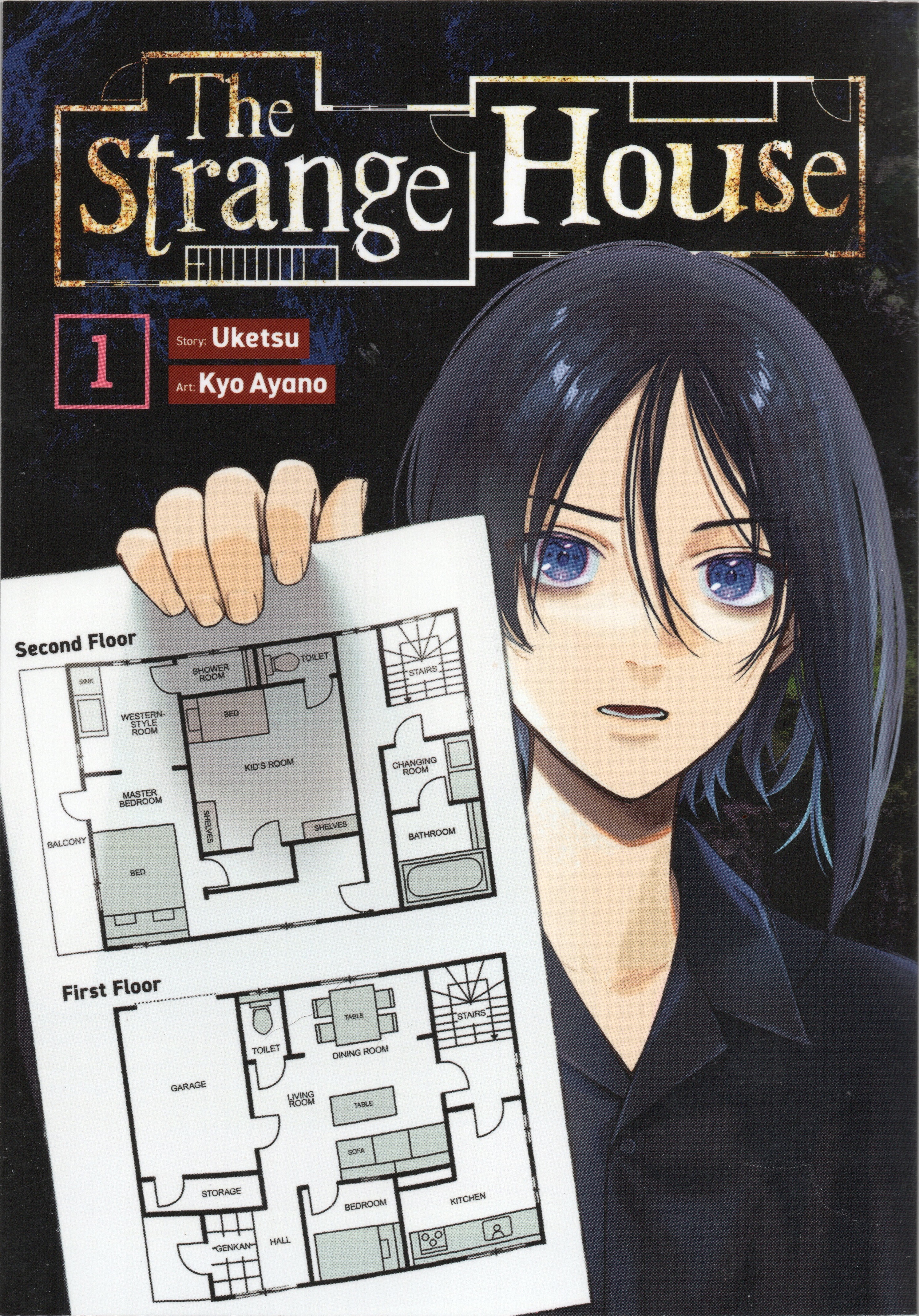
What started out as a simple, albeit rather sinister and morbid, hypothetical regarding how and why a doorless and windowless room would exist in a detached house uncovers a baffling and unsettling mystery. Or does it?

The first volume of The Strange House hooked me good with its chilling and intriguing blend of labyrinthian mystery and menacing atmosphere. What, if anything at all, was going on with the design plans of those houses?

Yes, houses. There are two of them. At the moment. But I would not be the least bit surprised if a few more strange houses were discovered in future volumes.

While I did hope and expect for there to be some intriguing developments in this second volume, which I was surprised and delighted to find I had to wait for, I was just a tad gobsmacked by the direction the story wound up taking.

It is still unclear as to whether or not there will be any kind of rational explanation here, or if there truly is something malevolent and murderous going on. As ludicrous and logic defying as the theories posited by the mystery loving Kurihara might seem to a rational mind, every revelation about the houses appear to point towards something odd and unusual.

Just how strange and how unusual the ultimate answers may or may not be remains to be seen. Judging by this volume's cliffhanger ending and its cryptic teasers for volume three, which will be released in April of 2025, whatever answers or questions are uncovered or asked are bound to chill and unnerve this particular reader.

April 2025. That's four months from now. I am going to have to wait four months to find out what happens next...

So it goes.

Friday, December 13, 2024

Angel Heart (1987) - Soundtrack


I remember plucking William Hjortsberg's novel Falling Angel from the paperback rack at a local store, way back in 1982, and giving it a brief once over. I did so because there was a blurb from Stephen King himself stating, "A terrific book. I've never read anything like it." The publisher ad copy, just beneath Hjortsberg's name, also promised that the book was a spellbinding novel of terror and the occult.

Despite all that, I passed on getting and reading Falling Angel. Why? No idea. I was fourteen and the book's artwork did not look scary enough to me, maybe? That was forty-two or so years ago, after all, and I wasn't taking notes.

Five years later a friend and I attended a matinee screening of Angel Heart that left us creeped out and good and rattled. That experience got me to track down and read Falling Angel. As much as I liked and admired the movie, I thought the book was even better.

I also purchased this soundtrack. which muddied the score presentation with snippets of dialog and sound effects from the film. Another shortcoming is the absence of the recording of Girl of My Dreams used in the film. Thanks to Angel Heart and its soundtrack, the song's melody became an ear worm that haunts me to this very day.

Alien (1979) - Trading Card #6


After months of cold sleep, Captain Dallas and his crew rise from the tomb-like bed chambers and stretch their stiffened muscles.

Thursday, December 12, 2024

Anaconda (1997) - Soundtrack


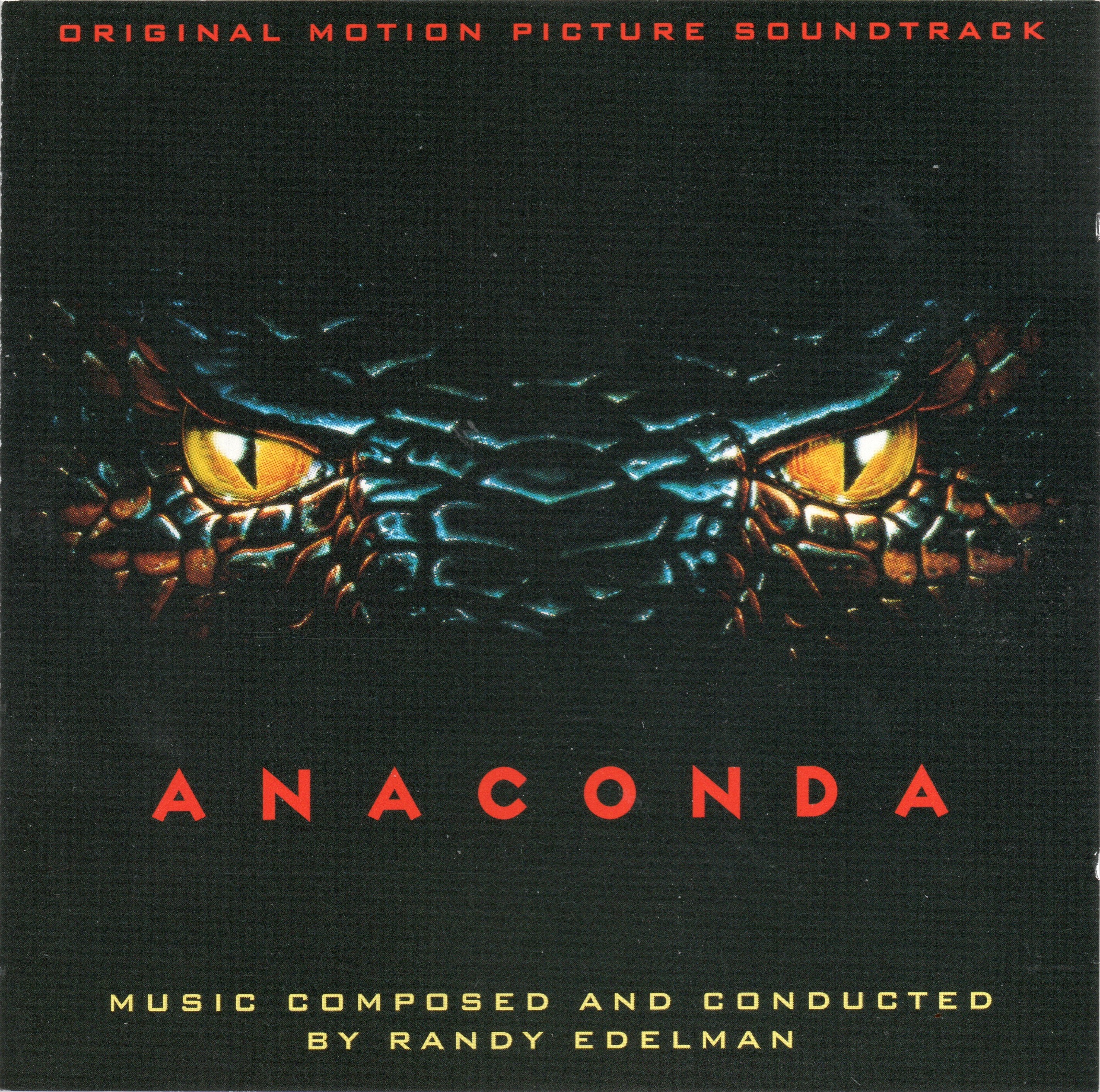
I am unaware if an expanded edition of Randy Edelman's score for Anaconda has ever been planned or released. Which means I am stuck with this 30-minute sampling of the highlights, which is better than not having anything at all.

Edelman's score leans into the adventure aspects of this delightful and unpretentious "little" creature feature. Anaconda combines a dash of Creature from the Black Lagoon with a whole lot of Jaws, with the end result being an entertaining monster mash of a movie.

I loved seeing the grin on the late Gene Siskel's face, and the twinkle in his eye, when he said, "I give this movie thumbs up for Jon Voight and the snake, how's that for film criticism!" I agree, they were both impressive as hell in Anaconda.

So was Edelman's score. Expanded release, anyone? Anyone?

The Blair Witch Project (1999) - Trading Card #8

Slain and Buried

Front: The basement of Rustin Parr's secluded house, where the bodies of seven missing children were discovered. Each child had been ritualistically murdered and disemboweled. Parr admitted to the killings but told authorities that he was obeying a voice in his head - the voice of an old woman - who commanded his actions. Rustin Parr's house burned down in 1942, although it inexplicably resurfaced in 1994 footage shot by missing students Heather Donahue and Micheal Williams.

Griggs House, the actual house the cast and crew filmed in, was demolished a few years after the release of the movie. Despite efforts to preserve it, so that fans and likeminded weirdos (like me) could visit the location and have their picture taken while standing at the precise location Michael was at the end of the movie, the house was destroyed. So it goes.

Wednesday, December 11, 2024

The Amityville Horror (1979) - Soundtrack


Even though I had been gravitating towards entertainments of the scary and spooky kind for as long as I could remember, it was more of an instinctual thing than a conscious act or decision on my part. Until 1979, that is. That was the year I turned twelve. It would also be the year when something unlocked and opened a door somewhere deep inside my brain. 

As I have shared elsewhere on this blog, 1979 is when I began to pay closer attention and started to contextualize all this weird, monstrous, and macabre stuff that fascinated me so. The year I became a fan of William Goldman, of Stephen King, of John Carpenter.

But what, if anything, does that have to do with The Amityville Horror? Nothing... and yet everything.

1979, for me, was when I began to transition out of childhood and into adolescence. When I began to question and study things with something akin to a critical eye, but an eye that was still suffused with a child's sense of wonder and its mercurial perceptions of art and reality. When the real and the unreal could still mingle and combine in a way that seemed to be, well, really real.

Nowadays that mingling can only be embodied and replicated in the books I read, the movies I watch, and music I listen to, but not in the way that I perceive reality. That door has closed.

Which brings me, albeit in the most circuitous of ways, to The Amityville Horror. This "true story" was quite the cultural phenomenon in 1979. A phenomenon that would itself transition into an exploitation cottage industry of ever more lurid and ludicrous books and movies and documentaries and mythical-god knows what else.

But in 1979 I thought it was real. While I did not see the film itself until 1980, or so. The word of mouth I heard around school was that the movie was nothing like the book and not all that scary. Nonetheless I did buy the soundtrack, despite my having not seen the picture, and enjoyed some of what I heard.

Like every other soundtrack album at that time, the music was a re-recording of select portions of the score. It also contained a disco version of the main title that, I will admit without any embarrassment or shame, got me dancing around my bedroom. There was also a jazz selection, titled Juke Box, that, while I liked it, I did not recognize it. Also included on the album was an aggressive (as described in Jeff Bond's liner notes for this release) arrangement of Bach's Concerto No. 5 for Harpsichord and Strings that composer Lalo Schifrin created for use in the film.

As much as I liked what little of the score there was on the album, and as much as it helped me acquire an appreciation for the use of human voices in film scores, I felt there was room for improvement. Something that did not happen until Quartet Records released this expanded edition of Schifrin's complete score in 2015. A delightful upgrade from the lackluster re-recording that Schifrin's own label had released. A re-recording which changed the tempo and timbre into something that sounded like an off-brand knock-off of his Oscar-nominated score.

While my feelings about the movie, its source material, and their questionable legacy remain ambivalent. There is one thing I have no doubt about, at all. Lalo Schifrin's score for The Amityville Horror is far more impressive and chilling than the film itself was ever capable of being.

Alien (1979) - Trading Card #5


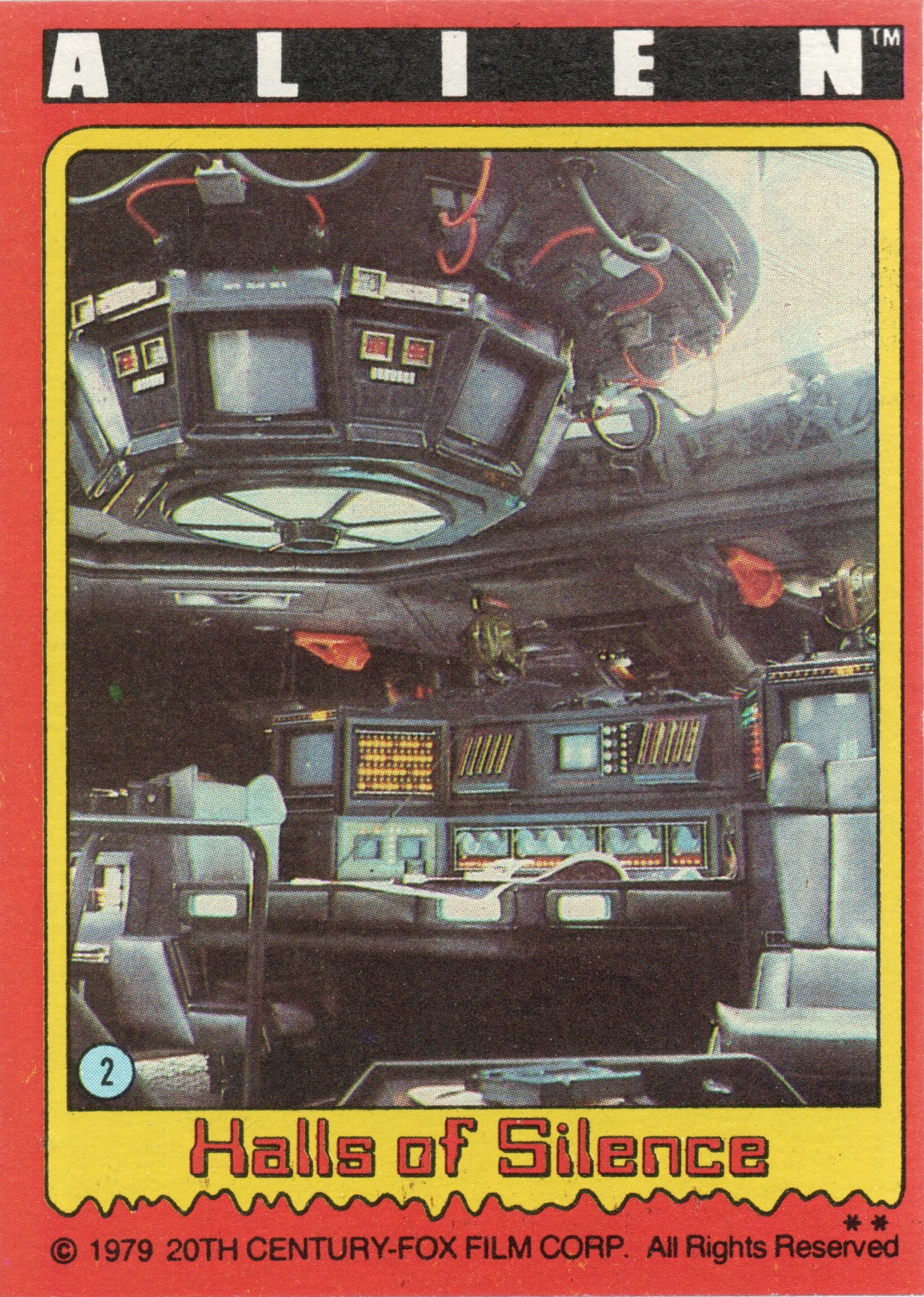
On the bridge of "Nostromo", two sophisticated star helmets begin exchanging data as the long-silent spaceship slowly stirs to life.

Tuesday, December 10, 2024

Ambition (1991) - Soundtrack


Although I remember seeing the TV spots and newspaper ads for Ambition, I did not see the actual movie until it was available for rental on home video.

There was a great deal about the movie that I both liked and related to, seeing that I was a very young wannabe writer at the time. One who was losing a struggle with some crippling personal issues that all but choked the life out of my creativity for decades. So it goes.

As bad as that might seem, it was very small potatoes in comparison to what one Mitchell Osgood (star-screenwriter Lou Diamond Phillips) does in Ambition. There are numerous scenes and plot twists from the film that are still etched in my memory.

One thing about the film that did not stick with me was its score. When Caldera released this limited edition soundtrack in 2019, I was stunned to see that it was Leonard Rosenman who had composed this score that I had no memory of. Which is odd, because, by this time, I would pay very close attention to the music in any and every movie or television show that I watched.

The simple fact that Rosenman's stylistic approach here was progressive, rather than harmonic, provides the answer. His themes and motifs are atonal and unnerving, but not all that attention grabbing. What Ambition needed was music that helped to create a sense of unease and anxiety, which it did. Quite well, in fact.

The Blair Witch Project (1999) - Trading Card #7

Rustin Parr

November 1940 - May 1941. Starting with Emily Hollands, a total of seven children were abducted from the area surrounding Burkittsvile. Seven months later, a hermit named Rustin Parr walked into a local market and announced that he was "finally finished." Police hiked to his secluded house in the woods and discovered the bodies of the seven missing children buried in his cellar.

Front: Child murderer Rustin Parr is interrogated by the press shortly before his public execution.

Monday, December 9, 2024

Allan Quatermain and the Lost City of Gold (1986) - Soundtrack


Turns out there is a good reason for my not remembering the score Michael Linn composed for this sequel to 1985's King Solomon's Mines. It's not really a score.

Jerry Goldsmith had composed and conducted the excellent score for the first film and, to save on production costs, the decision was made to recycle most of it for Allan Quatermain and the Lost City of Gold. Selections from Doc Seltzer's score for The Ambassador (1984) and George S. Clinton's score for Avenging Force (1986), also owned by The Cannon Group, were also recycled for use in the film.

Even with all that recycling there were still sections and snippets that needed music. Enter Michael Linn, who composed and conducted said filler, to create what amounts to a hint and a tease for what an actual original score might have sounded like. There is enough color and character on display to have me wish that Linn had been able and allowed to score the entire film.

Alien (1979) - Trading Card #4


Saturday, December 7, 2024

Werewolves (2024) - Review

One year after a super moon event turned anyone and everyone exposed to moonlight into a blood-thirsty werewolf, another super moon is about to rise in the night sky. As people across the globe race to fortify their homes, a group of scientists prepare to test a potential cure...


This, I am sad to report, is an Idiot Plot Movie. A movie wherein every single thing that happens is predicated on each and every character being an absolute dolt. It got so bad that, towards the end, I began rooting for the werewolves.

Not that my expectations were all that high to begin with, I knew what kind of movie I was going to see. The problem, I think, was that the people who made Werewolves did not know what kind of movie they were making, or had made.

While the film staggered and splashed across the big screen, my mind drifted back to the Werewolves panel at this year's Son of Monsterpalooza. That is where I watched star Katrina Law, director Steven C. Miller, suit actor Dane DiLiegro, and effects legend Alec Gillis engage in an entertaining conversation about the making of the film. 

A great deal of lip service was paid to the supposed human element of the film. Werewolves, they said, featured characters who were wracked with guilt over having become monsters that murdered or maimed family members, friends, and neighbors. There were also characters that enjoyed and embraced the change. Who yearned to return and revel in yet another bloody night of chaos and carnage.

Which is what I went in expecting to see. There was just one problem, though. Matthew Kennedy's scattershot script does not have people in it. There is no human element to it, at all. What the panel had described and discussed did not resemble what I was watching. 

While it was clear that the actors had been directed as if there was a human element to what they were doing, the script gives them nothing. There is little to no backstory, no motivation beyond what is needed to get somebody to move from Point A to Point B, and no sense of menace, scope, or urgency.

For a movie whose elevator pitch might have been "Think The Purge, but with werewolves," I was disappointed by how antsy and impatient the movie made me. Despite all the talk and preparation for the chaos and carnage to come, little to none of it is heard or glimpsed. 

Couple that with the primary characters never seeming to be put in any kind of life-threatening danger and what do you have? A 90-minute disappointing nothing burger of a supposed monster movie.

Friday, December 6, 2024

Alien Nation (1988) - Soundtrack


Goldsmith's unused score for Alien Nation was one of only three he composed and performed entirely on synthesizers. The other two were for Michael Crichton's 1984 science-fiction thriller Runaway and Martin Campbell's 1988 legal thriller Criminal Law. More on those later.

Alien Nation would be the second collaboration between director Graham Baker and Goldsmith, following 1981's The Final Conflict. While Goldsmith's score for Alien Nation might not be as robust as the one he wrote for The Final Conflict, it did not deserve to be rejected.

The big irony here is how the story behind Goldsmith's score, told in the liner notes of this limited release from Varèse Sarabande, is more interesting than the film it was written for.

A melody that is used throughout the score was first written by Goldsmith for the Oliver Stone film Wall Street. After Goldsmith quit Wall Street, he opted to use it for Alien Nation. When that score was rejected, he recycled his unused melody yet again, for The Russia House (1990). The third time was charm and the melody became one of Goldsmith's better known and admired love themes.

The Blair Witch Project (1999) - Trading Card #6

Robin Weaver

March 1886. Eight-year-old Robin Weaver was reported missing and search parties from Burkittsville were dispatched. Although Weaver soon returned, the first search party did not. The bodies of the searchers were found at Coffin Rock, completely disemboweled, with their arms and legs bound together. Young Weaver claimed to have met a mysterious lady, who seemed to float in the air.

Front: A photograph of the second search part at Coffin Rock.

Thursday, December 5, 2024

The Strange House, Volume 1 - Review


When an anomaly in the design of a detached house is noticed by a prospective buyer, he brings it to the attention of a freelance occult writer he knows. The writer, from whose perspective we are seeing this story play out, is intrigued about the anomaly, but doubtful there is anything occult about it.

The writer starts questioning her doubt after an architect friend looks at the plans. He notices that there are all manner of weird anomalies in the detached house's design. This gives rise to some strange and unsettling ideas and theories from him about how and why those anomalies are there...

When I started the first volume of The Strange House, I had no idea of what I was in for. The core concept of a house having a sealed room, one that has no windows or doors allowing for either ingress or egress, was vague and confounding enough to get me curious over whether there would be a natural or a supernatural explanation behind it.

Having finished that first volume, I still have no idea of what is or is not going on with, or in, that damn detached house. I just know that I have to read the second volume, so I can find out what, if anything, will happen next. 

Even though it is made very clear that there is something very wrong and very weird going on here, whether it has anything to with the house, or if it is just overactive imaginations gone wild, remains to be seen.

All I can share, for now, is that the first volume of The Strange House grabbed my attention and gave my nerves a wee-bit of rattling. I recommend it.

Alien Resurrection (1997) - Soundtrack


If you have ever wondered what The Poseidon Adventure might have been like if a xenomporh had happened to be on the ship, this movie provides the disappointing answer.

John Frizzell's score for the film is solid, but unexceptional. Nothing in it ever grabs or holds my attention. Which is why I chose to pass on an upgrade when an expanded edition of the score was released by La-La Land Records in 2010.

Tuesday, December 3, 2024

Alien 3 (1992) - Soundtrack

The Alien trilogy, back when it could qualify as one, paralleled Romero's Dead trilogy, back when it also could qualify as one, to a certain extent.

Night of the Living Dead and Alien were both commercial and artistic successes that had distinct influences on their respective genres. The same applies to their sequels, Dawn of the Dead and Aliens, which amped up the action and expanded the scope of the fictional worlds in which their stories took place.

Then came Day of the Dead and Alien 3. Both were dark and downbeat films that did not sit all that well with audiences or critics. While Day is my favorite of Romero's zombie films, Alien 3 is not my favorite Alien movie. While there are plenty of things I like about Alien 3, they do not come together to form a satisfying whole. The film is unfocused and clunky. The result of studio interference, no doubt.

Elliot Goldenthal's score is one of those things I like about the movie. Just not enough to switch out this original soundtrack album 1992 release for the expanded, remastered edition put out by La-La Land Records in 2018. So it goes.

Frankenstein (1931) - Newspaper Ad [San Francisco Examiner - December 3, 1931]

The success of Dracula set the stage for the taking of this risky second venture into gothic horror. With Dracula, at least, there was the proven success of the stage production it was adapting to point at and assuage the concerns of dubious investors.

That was not the case with Frankenstein, though. This was a big swing gamble that had more than a few people at Universal Studios questioning the commercial instincts of Carl Laemmle Jr., the 23-year-old head of production.

Laemmle's instincts proved correct, though. Frankenstein was another smash hit for the studio and, coupled with Dracula, opened the creative doors, so that other monsters would be able to shamble out of the shadows and up onto the big screen.

Monday, December 2, 2024

Stanley (1972) - Review

"People just don't understand friendly rattlesnakes."

Tim Ochopee (Chris Robinson) returns from Vietnam wanting little, if anything at all, to do with people. He keeps himself sequestered in an isolated shack buried deep inside the Florida everglades. His only company being the many snakes he has managed to befriend and now cares for. 

Enraged when his beloved snakes start being hunted and killed, or captured and exploited, Tim decides to have his pet rattlesnake Stanley do a little hunting and killing of his own.

The sole reason Stanley was able to slither its way into my movie collection was due to its disc being packaged with Horror High. Thus creating the kind of exploitation double-feature package one might have seen at the local drive-in, way back in the mid-1970s.

Stanley is the second of four killer snake movies I have childhood memories of. Number one, though, is 1973's Sssssss, which was a syndication staple. Then comes Stanley, because I remember being freaked out by one of its TV spots. Third is 1976's Rattlers, while fourth is 1981's Venom. This aside completes the memory lane portion of my review.

Coupling Stanley with Horror High does make sense, though. Both came out within a year of one another and both were distributed by Crown International. That means there was a better than average chance they played as an actual double-feature at some point.

Producer-director William Grefé, in the bonus features, shares how he was inspired to create Stanley after seeing the success of Willard. That the film's story came to him in a vivid dream. Maybe that story is true, maybe it is not. But the similarities between Stanley and Willard go beyond them just sharing a namesake title.

First is the antagonists all having a personal connection with protagonist's deceased father. Second is the tragic death of one the protagonist's beloved pets driving him over the edge. In Willard it was the white rat Socrates. In Stanley it is Stanley's mate Hazel and their children.

Wait... I'm no herpetologist, but I do know that reptiles are not known for being all that doting as mates or parents. But, it's just a movie... and a knock-off of Willard. So this makes the snake Stanley the reptile version of Willard's rat Ben, who just so happened to get his own namesake movie. Go figure.

Stanley could best be described as a film with an interesting character that is in dire need of a study. Star Chris Robinson does what he can with the paper thin material he has to work with, but there is precious little he is ever given to do. 

Although this movie predates Jaws by three years, think of the dramatic boost it could have gotten if Tim, after discovering Hazel and the children have been killed, pours his heart out to Stanley via an Indianapolis story-style monologue, connecting the slaughter with something he either did or witnessed in Vietnam.

Wait, there is a moment in the film that comes very close to doing that. It is when Tim shares the dinner table with Hazel and Stanley, feeding them mice while he has a vegetarian meal. He voices his wish that they could become vegetarians like him. That they would not have to kill another animal in order to eat. The opportunity was right there. So close. So. Very. Close. Too bad they missed it.

Which leaves us with the slaughtering of the antagonists. There is a great scene involving quicksand, one not so great bit involving a couple in a bed, and a laugh out loud moment where co-star Alex Rocco, while preparing to jump into a snake-infested swimming pool, looks around at everything but the pool he's about to jump into.

Then there's that freeze frame. That glorious and goofy freeze frame. Oh, and Alex Rocco was not acting in that pool. The poor man was terrified of snakes and Grefé did not pass on the opportunity to exploit that for bigger and louder screams from the actor.

Having given Stanley a quasi-reluctant revisit (I remember watching it once on Creature Features, when John Stanley was the host) I doubt I will be making another. So it goes.

The Blair Witch Project (1999) - Trading Card #5

Eileen Treacle

August 1825, one year after Blair was reborn as the town of Burkittsville. Eleven witnesses testified to seeing a pale woman's hand reach up and pull ten-year-old Eileen Treacle into the shallow waters of Tappy East Creek. Her body was never recovered. For thirteen days after the drowning, Tappy Creek was clogged with oily bundles of sticks and the water soon became fouled and unusable.

Front: A mid-19th century illustration of the Eileen Treacle incident.

Saturday, November 30, 2024

Aliens (1986) - Soundtrack

Although there had been talk and an intention of doing an Alien 2 as early as late 1979, when it was clear to the producers and distributors that Alien was a bona fide hit, seven years would pass before the long desired sequel managed to get made and released into movie theaters across the globe.

Despite there being both a different director (James Cameron) and composer (James Horner) this time around, it seems that history would repeat itself. As Horner's score would be truncated, rearranged, and even replaced in the final version. According to Nick Redman's detailed liner notes, "no cue, save for the Main and End Titles, are where they should be, and no cue (except for Bishop's Countdown) plays in its entirety as it was written." So it goes.

In an irony that I am sure neither James Horner or Jerry Goldsmith appreciated, two selections from Goldsmith's score for the original Alien were used in Aliens. Sleepy Alien and a snippet from Parker's Death.

Sunday, November 24, 2024

Alien (1979) - Soundtrack


1979 was the year that I "discovered" Jerry Goldsmith, because I got the soundtrack albums for both Alien and Star Trek The Motion Picture for Christmas. Up until then the only film composer's name that I was familiar with was John Williams, who had provided the memorable score for my favorite movie of all time, Jaws. More on that later...

As for my discovery of Goldsmith... 1979 would also be the year I figured out that there were people behind the camera responsible for creating and crafting the movies and television programs I was watching and, more often than not, enjoying. It was when I started to pay closer attention to all the names listed in both the opening and ending credits.

I had not seen Star Trek The Motion Picture, but was a big fan of the show, which is no doubt why my parents chose to give me that particular soundtrack album. Alien, however, had been one of the most impactful cinematic experiences of that year for me. (John Carpenter's Halloween would be the other one. But that is yet another subject for another post at another time...)

I do not know if it was on Christmas Day itself, but I do remember the jolt when I first noticed that the very different sounding scores for both Alien and Star Trek The Motion Picture had been composed by the very same man. Whoa.

Film editor Terry Rawlings temped his working cuts for Alien with as much of Goldsmith's past music he felt would communicate the kind of mood he and director Ridley Scott wanted for the film. The composer, who disliked temp tracks, did not appreciate Rawlings efforts. Goldsmith would also be infuriated and insulted at Rawlings and Scott's decision to retain the temp music for three sequences and the end titles in the finished film. Those three sequences utilized pieces taken from Goldsmith's Oscar-nominated score for Freud (1962), while the end credits were accompanied by a section from Howard Hanson's Symphony No. 2.

That is why the first time I listened to the Alien soundtrack, on that Christmas Day way, way back in 1979, hearing music that I did not recognize at all was a disconcerting and disappointing surprise.

12-year-old me was confounded and frustrated by all this unrecognizable music. Especially the Main Title. Where was the weird and haunting music that had played over the opening credits in the movie? I wanted to hear what had been in the movie. I did not know that this was the music Goldsmith had composed for the movie and, for a variety of reasons, had not been used.

Even though Goldsmith liked to grumble about his scores being collected as if they were bottle caps. About said collectors wanting each and every note of music, regardless of its quality or meaning. What he might not have realized, or understood, was how something he might have found unimportant, or unrepresentative of what he was doing with the score, could be very important to a listener, or fan, such as myself.

What imprinted on me was the Main Title used in the film. Which is included in this 2007 release from Intrada that contains every note Jerry Goldsmith composed for the film. 

While the film version's inclusion was appreciated by adult me, and would have been adored by 12-year-old me, I now understand Goldsmith's frustration with how his subtle approach to the opening of the film was dismissed and discarded. That he was made to do something obvious. In the liner notes Goldsmith laments, "The original one took me a day to write, and the alternate took me about five minutes."

Now that I have had the chance to listen to them side by side, adult me can hear the difference. There is real craft and passion in the original version, while the alternate is a professional, albeit passionless, work-for-hire piece.

Having each and every note can offer quite the education and I consider this 2-disc set to be one of the Crown Jewels of my soundtrack collection. 

Friday, November 15, 2024

Halloween (1978) - Newspaper Ad [Oakland Tribune - November 15, 1978]


On October 25th my Facebook feed was peppered with posts celebrating the fact that John Carpenter's Halloween opened in theaters and drive-ins for the very first time on October 25, 1978. Because, more than likely, that is the earliest date that is listed on its IMDB page.

While this might be true, the number of theaters it played in was quite small. I was surprised to learn that Halloween never had a wide theatrical release. That it never played in more than 200 theaters at any given time. It would open in a market, play for a week or two, then move on to the next.

Which explains how and why Halloween first opened at a theater or drive-in near me on November 15, 1978. NOVEMBER!?! The celebration of Halloween would already have been a distant memory to 11-year-old me. My heart would be focused on Thanksgiving and, even better, Christmas.

So it should come as no surprise that I have no memory of this release, at all.

Halloween would first ping my blossoming horror geek radar when this issue of Newsweek arrived in the family mail.

Newsweek - June 18, 1979

This is where, buried amongst the coverage of the looming releases of Alien, Prophecy, and Dawn of the Dead, that I learned that a movie called Halloween existed. I am pretty sure that Phantasm, The Brood, and maybe even The Dark were also mentioned in the cover article.

Although the positive word of mouth of audiences, and the acclaim of critics, was beginning to grow around Halloween, the article's coverage was pretty basic. It stated that Halloween, a scary sleeper hit, would be getting another release in the fall and offered a single image from the film. That of a sheeted figure standing in a doorway. But it was enough to get me interested and excited about seeing this movie called Halloween.

Thursday, November 14, 2024

7 Doors of Death [The Beyond (1981)] / Superstition (1982) - Newspaper Ad [San Francisco Examiner - November 14, 1985]

How on earth did I miss out on catching this banger of a "Cursed House" double feature? 

If I had gone to see this, then I would have been able to have seen at least one Lucio Fulci movie on the big screen. Granted, this would have been in a somewhat edited version, but still.  It would have been a Lucio Fulci movie, on the big screen. Come on.

Superstition is also a whole lot of fun and well worth checking out.

Tuesday, November 12, 2024

The Blair Witch Project (1999) - Trading Card #4

The Blair Cult

A rare book entitled "The Blair Witch Cult" was published in 1809. It was a collection of almost incoherent ramblings purporting to tell the history of the Blair Witch, describing archaic, often bloody rituals, and assorted witchcraft experiences. The only remaining copy is currently in the library of the Maryland Historical Society.

Front: Objects displayed here were supposedly used by the Blair Witch cult in connection with the book.

Hey, what fabricated mythology would be complete without a rare book about it secreted somewhere safe from prying, curious eyes?

Monday, November 11, 2024

A Nightmare on Elm Street (1984) - Newspaper Ad [San Francisco Examiner - November 11, 1984]

I was living overseas, in Hong Kong, when A Nightmare on Elm Street was released in the United States in November of 1984. So I have zero memories of it as a theatrical release or viewing experience. Never saw the poster hanging in a lobby, nor did I see any TV spots for it. Because I was not there. So it goes.

It was not until Fangoria's 43rd issue arrived in the mail and I read a letter in The Postal Zone that praised a film called A Nightmare on Elm Street for creating an ultimate boogeyman that I became aware of its existence. What was this movie with a villain the letter writer deemed capable of scaring Jason Voorhees himself?

This praise both intrigued me and made me anxious to see this "ultimate boogeyman" film. Which I was able to in, I believe, the Thanksgiving weekend of 1985. When I rented the movie on home video. It not only managed to scare the shit out of me, but it also kept me awake that night. As I was afraid to fall asleep.

Something that would not happen again until, 25 years later, an opening night viewing of Paranormal Activity rendered me too scared to sleep. Good times.

Saturday, November 9, 2024

Alien (1979) - Trading Card #1


Time: the future. Place: the commercial towing vehicle "Nostromo", a gigantic Mineral Ore Refinery being tugged across the galaxy. Its crew, five men, two women, and one cat, are deep in hyper-sleep...

While it might not seem as big a deal today, back in 1979 an R-rated, and quite gory, monster movie having a bunch of merchandise marketed toward children caused a small stir of controversy.

I do recall watching a segment of Sneak Previews wherein Gene Siskel took a moment to hold up one of Kenner's 18" Alien figures and rant about how vile it was for a toy company to make and sell something so inappropriate for children. 12-year-old me thought he was an overreacting, stick-in-the-mud jerk-face. That toy looked awesome and I wanted it, bad.

Yet who got it for Christmas that year? My younger brother. I got the soundtrack album, Heavy Metal's Alien: The Illustrated Story, and Richard J. Anobile's Alien: The Movie Novel. So it goes.